
应土木工程与力学学院、西部灾害与环境力学教育部重点实验室邀请,苏黎世联邦理工学院实验流体力学Filippo Coletti教授将于2026年10月28日上午做学术报告,欢迎广大师生参加。
- 报告题目:Particles in turbulent environments: imaging sand and snow
- 报 告 人:Filippo Coletti 教授
- 报告时间:2026年10月28日(星期三)9:00-11:00
- 报告地点:祁连堂322报告厅
- 主 持 人:王萍 教授
报告人简介
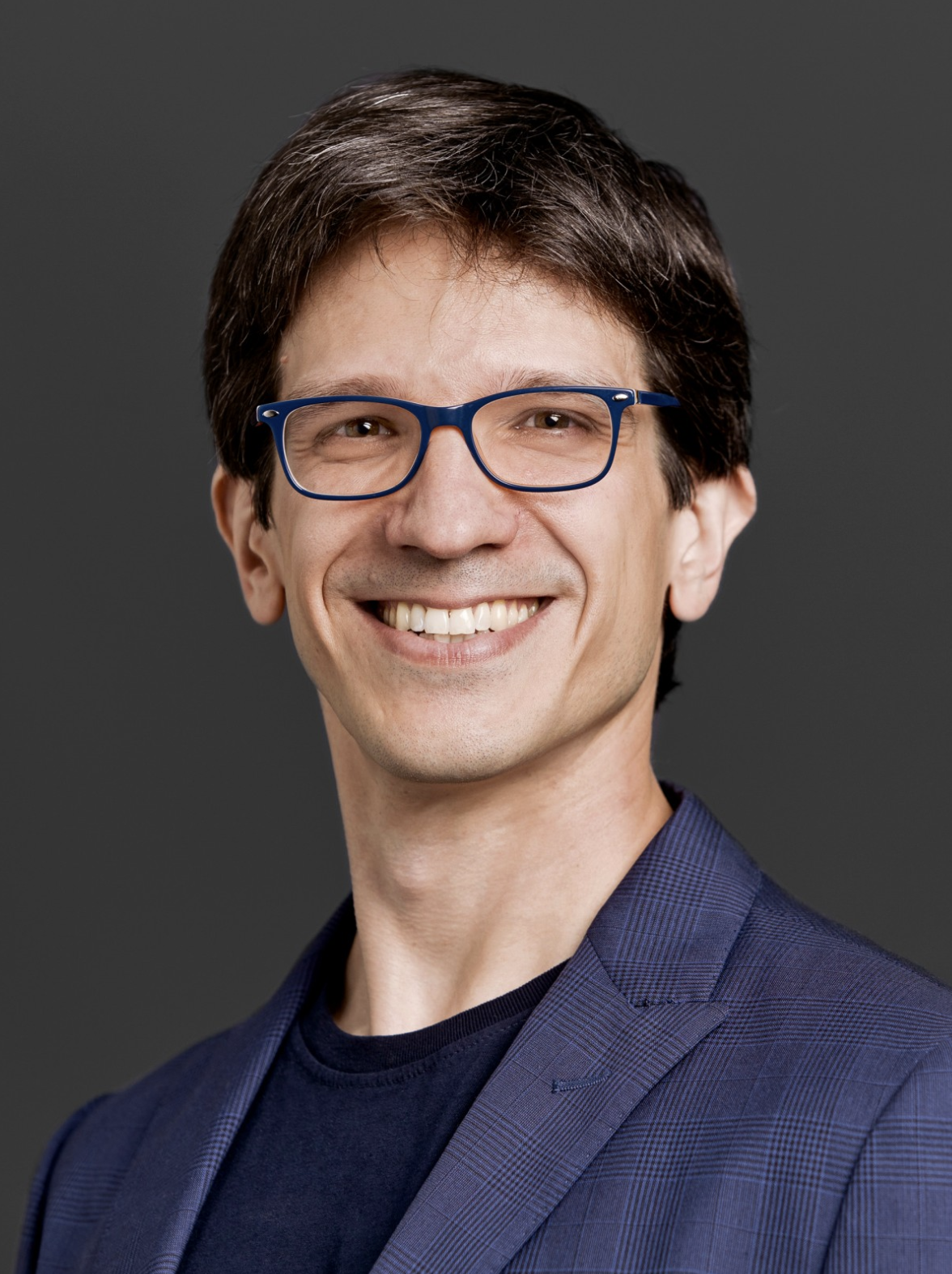
Filippo Coletti is Professor of Experimental Fluid Dynamics at ETH Zurich, where he has been since 2020. Previously he was McKnight Land-Grant Professor of Aerospace Engineering & Mechanics at the University of Minnesota, which he joined in 2014. He performed his doctoral studies at the von Karman Institute for Fluid Dynamics and at the University of Stuttgart, where he obtained his PhD in 2010, and was postdoctoral fellow at Stanford University between 2011 and 2013. He received the CAREER award in 2015 from the US National Science Foundation and the Consolidator grant in 2022 from the European Research Council. He is a fellow of the American Physical Society and associate editor of Journal of Fluid Mechanics. He founded and co-organizes the Fluid Mechanics Tour of the Alps, an itinerant seminar series featuring the world’s top fluid mechanicians. His research interests focus on multiphase flows, which he studies with a range of experimental approaches and with applications to environmental, biomedical, and industrial problems.
报告摘要
Research on particle-laden turbulence is often motivated by environmental processes. After investigating relatively simple, academic – one could say clean – configurations, in the last few years my group has tackled three natural phenomena: aeolian saltation, snow precipitation and avalanches. Those are highly complex – one could say dirty – systems, in that the various mechanisms are inextricably coupled, and some of the key parameters are not controllable. They are, however, hugely relevant and fascinating problems, which we attack using state-of-the-art imaging both in the laboratory and in the outdoor field.
We study aeolian saltation over an erodible bed at full transport capacity in a large wind tunnel. Lagrangian tracking of glass particles resolves their concentration, velocity and acceleration. In contrast to common assumptions, all quantities appear sensitive to the friction velocity. Particle collisions with the bed and other particles in midair are detected thanks to the combination of long-range microscopy and object-identification algorithms. Taken together, the results indicate that aerodynamic forces play a more significant role for saltation than presently recognized, being complementary rather than alternative to splash processes.
We study snow precipitation in the atmospheric surface layer using a 3D imaging system deployed in the Swiss Alps at nighttime. Sixteen cameras mounted on arrays are distributed over four viewpoints to reconstruct the motion of millions of snowflakes falling through a volume of a thousand cubic meters. Capturing data at one terabit per second, we characterize the inhomogeneous spatial distribution and velocity of the hydrometeors, with implications for remote sensing and ground accumulation.
We study the suspension layer of powder snow avalanches using multiple cameras placed in an instrumented pilon in a Swiss mountain valley. By analyzing particle brightness and motion (via a combination of particle image velocimetry, particle tracking velocimetry, and optical flow), we estimate particle concentration, flow velocity, and turbulence characteristics. We observed patterns consistent with shear instabilities, similar to Kelvin–Helmholtz waves, which drive mixing and clustering within the flow.